

ltdann
Well-known member
- Joined
- Aug 27, 2007
- Messages
- 4,780
- Reaction score
- 144
Chuck, Jim and I just finished 9 days of hunting at VAFB, using the Duplek monolit 32 solid steel slugs. These are DFG lead free approved 12 gauge slugs made in Lativia. They are solid steel and are rated for rifled barrels and smoothbore and the only slug on the market that makes that claim. They are not sabot rounds. There is a plastic ring near the head of the slug and a plastic skirt at the rear that engage the rifling and stabilize the slug in flight. What makes these slugs attractive is that they are around $3-3.50 a box, rather then $14-18 a box typical of a solid copper round.
I was shooting a Remington 11-87, Jim a Remington 870 and Chuck a Mossberg 5500, all scoped and with fully rifled barrels. We found the accuracy to be fantastic. We all sighted in at 50 yds, and then moved to 100 yds. Chuck was routinely shooting 2 shot keyhole groups, well within a 3" circle. Jim was the same. I wasn't key holing, but could easily put 3 rounds inside 4 inches @ 100 yds. That's not bad, considering 10 years ago, anything past 35 yds with a slug gun was considered a "lucky shot". It’s worth noting that the slug dropped 8-12” between 50 and 100 yds. They have a parabolic arc like a mortar and that proved to be significant.
They first shot taken on game was a hit. It was a doe ranged at 98 yds and it was apparent that she was hit. She jumped straight up and then took off. We watch her run off with no apparent difficulty. We found some blood, but by no means a huge amount and it quickly disappeared. After some searching we concluded it was a grazing shot and chalked it up to shooter error.
Chuck shot a buck at about 60 yds and knocked it down. As he approached it, it jumped up and ran over the horizon. We were able to watch for over 500 yds before it disappeared. We did find some blood, but again, not much. There was a patch of fur on the ground and from its size and color, we figure Chuck grazed the top of its skull, giving it a “doehawk”.
By now, we were beginning to believe that we were over shooting the animals. This proved to be true because when I shot the pig, I aimed at the bottom of the hog and hit it just below the spine. It rolled the pig over, but it got up and ran quite a distance before I caught up with it and put another in the shoulder at around 5 feet and a final one in the skull.
Post mortem indicates the first round was a pass through. Small enter and exit wound, without much damage in between. The round in the shoulder did NOT pass through. The slug was found in the offside shoulder wedged in the joint. Again, not as much damage as I expected. We didn’t dig through the brains to recover the skull shot. The recovery slug show absolutely no signs of deformation. It looked like you could reload it and use it again.
The next day, we came across a buck at about 35-40 yds. It was a frontal shot and remembering the parabolic arc, I aimed at the bottom of the fur and hit it high on the right shoulder. The slug entered and exited on the right side. The animal ran about 60 yds and died. No blood trail.
Jim pops a buck which promptly runs off. He follows the blood trail for 200 + yds and looses the trail when the blood drops fade away. The buck was last seen entering a UXO (restricted) area and wasn’t recovered. He felt that the animal was hard hit and can’t understand why it didn’t drop.
After walking all morning, I decided to sit at the edge of a road and just take a break. Five minutes after I sat down, a buck steps out of the brush and starts walking down the road towards me. I had plenty of time so I ranged two trees (50 and 62 yds) and decide that when the buck gets in between them I’ll take the shot. I aim at the bottom of the chest and hit the top of the right shoulder. The deer runs about 100 yds and drops. The brush wasn’t that thick so I could see it fall and good thing too. Once again there wasn’t a blood trail and when we walked up to the buck, the entrance wound was clearly visible and there wasn’t a drop of blood coming out of it. We eventually found the slug buried deep in the hindquarter where it had caused no meat damage whatsoever.
Chuck was clearly disgusted at this point and switched back to the Federal Barnes tipped TSX (now discontinued) and shot a doe that was DRT. It dropped like it was pole axed. Lots of damaged that you’d expect from a hollow point.
All of the animals shot with the Duplek mono32’s exhibited very little blood trails and minimal meat damage. The entrance and exit wounds were small and almost all the bleeding was internal. All animals shot, ran.
I haven’t decided if I’m going to continue to use these again. Jim and Chuck aren’t. We’re going to see if we can find some Hexolit 32’s (expanding) slugs, before we give up completely. They run about $8 a box.
If you can make a fatal hit and can watch the animals when they run, your good. Don’t count on blood trails because there probably won’t be one.
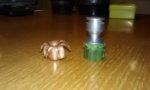
Left: Barnes expander recovered from deer and the Monolit 32 recovered from the buck. Note lack of deformation on the 32. It is missing the upper plastic ring.
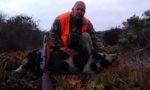
Right: The hog that sucked up 3 steel 12 gauge slugs.
I was shooting a Remington 11-87, Jim a Remington 870 and Chuck a Mossberg 5500, all scoped and with fully rifled barrels. We found the accuracy to be fantastic. We all sighted in at 50 yds, and then moved to 100 yds. Chuck was routinely shooting 2 shot keyhole groups, well within a 3" circle. Jim was the same. I wasn't key holing, but could easily put 3 rounds inside 4 inches @ 100 yds. That's not bad, considering 10 years ago, anything past 35 yds with a slug gun was considered a "lucky shot". It’s worth noting that the slug dropped 8-12” between 50 and 100 yds. They have a parabolic arc like a mortar and that proved to be significant.
They first shot taken on game was a hit. It was a doe ranged at 98 yds and it was apparent that she was hit. She jumped straight up and then took off. We watch her run off with no apparent difficulty. We found some blood, but by no means a huge amount and it quickly disappeared. After some searching we concluded it was a grazing shot and chalked it up to shooter error.
Chuck shot a buck at about 60 yds and knocked it down. As he approached it, it jumped up and ran over the horizon. We were able to watch for over 500 yds before it disappeared. We did find some blood, but again, not much. There was a patch of fur on the ground and from its size and color, we figure Chuck grazed the top of its skull, giving it a “doehawk”.
By now, we were beginning to believe that we were over shooting the animals. This proved to be true because when I shot the pig, I aimed at the bottom of the hog and hit it just below the spine. It rolled the pig over, but it got up and ran quite a distance before I caught up with it and put another in the shoulder at around 5 feet and a final one in the skull.
Post mortem indicates the first round was a pass through. Small enter and exit wound, without much damage in between. The round in the shoulder did NOT pass through. The slug was found in the offside shoulder wedged in the joint. Again, not as much damage as I expected. We didn’t dig through the brains to recover the skull shot. The recovery slug show absolutely no signs of deformation. It looked like you could reload it and use it again.
The next day, we came across a buck at about 35-40 yds. It was a frontal shot and remembering the parabolic arc, I aimed at the bottom of the fur and hit it high on the right shoulder. The slug entered and exited on the right side. The animal ran about 60 yds and died. No blood trail.
Jim pops a buck which promptly runs off. He follows the blood trail for 200 + yds and looses the trail when the blood drops fade away. The buck was last seen entering a UXO (restricted) area and wasn’t recovered. He felt that the animal was hard hit and can’t understand why it didn’t drop.
After walking all morning, I decided to sit at the edge of a road and just take a break. Five minutes after I sat down, a buck steps out of the brush and starts walking down the road towards me. I had plenty of time so I ranged two trees (50 and 62 yds) and decide that when the buck gets in between them I’ll take the shot. I aim at the bottom of the chest and hit the top of the right shoulder. The deer runs about 100 yds and drops. The brush wasn’t that thick so I could see it fall and good thing too. Once again there wasn’t a blood trail and when we walked up to the buck, the entrance wound was clearly visible and there wasn’t a drop of blood coming out of it. We eventually found the slug buried deep in the hindquarter where it had caused no meat damage whatsoever.
Chuck was clearly disgusted at this point and switched back to the Federal Barnes tipped TSX (now discontinued) and shot a doe that was DRT. It dropped like it was pole axed. Lots of damaged that you’d expect from a hollow point.
All of the animals shot with the Duplek mono32’s exhibited very little blood trails and minimal meat damage. The entrance and exit wounds were small and almost all the bleeding was internal. All animals shot, ran.
I haven’t decided if I’m going to continue to use these again. Jim and Chuck aren’t. We’re going to see if we can find some Hexolit 32’s (expanding) slugs, before we give up completely. They run about $8 a box.
If you can make a fatal hit and can watch the animals when they run, your good. Don’t count on blood trails because there probably won’t be one.
Left: Barnes expander recovered from deer and the Monolit 32 recovered from the buck. Note lack of deformation on the 32. It is missing the upper plastic ring.
Right: The hog that sucked up 3 steel 12 gauge slugs.
Last edited:


