sccrbllr

Well-known member
Joined
Aug 30, 2004
Messages
218
Reaction score
0
Quick question and how serious. Well I was watching a hunting show and they said it is real important to sight in you rifle at your hunting elevation. I live at about 1500' and that is what I sight it in at. We hunt anywhere from 8000-11000 feet. I would rather not shoot where we hunt for obvious reasons, but is it really that important and what generally happens to a bullet in flight at different elevations.
Thanks
 

Nickman

Active member
Joined
Apr 16, 2006
Messages
25
Reaction score
7
Geesh.........More BS to worry about.

If you shoot a rifle that has SHOWN any marked difference at elevation changes, you better find a new rifle.
If you were shooting paper bench rest targets for competition, you MIGHT have an issue between a match in San Diego and a match on Pikes Peak.
In a big game animal situation, it is simply nothing to concern yourself with.
 

sccrbllr

Well-known member
Joined
Aug 30, 2004
Messages
218
Reaction score
0
thanks

I really didnt want to have another thing to worry about. Just one of those things that kept bothering me ever since i heard that on the tv.
 

easymoney

Well-known member
Joined
Jan 16, 2003
Messages
10,522
Reaction score
101
Geesh.........More BS to worry about.

Sighting in is more important if you have bumped your setup while traveling or dropped your gun. IMHO, if you have a fast hunting cartridge(and most folks do today) once you sight in you are good to go.
That being said, if you are a military sniper used to shooting out to 1000 yds or more yeah you will be continually sighting in or doping your info. If you shoot a slow round like a 30-30 or another in the rainbow group, yeah you might have to assure that your arc will be what you think it is at 10,000 or more feet elevation.
Most peope sweat too much about this kind of thing and if you are in the ten ring, shoot a fast hunting caliber(257-300 win mag) and you can shoot your weapon well under all conditions, you will be just fine.
 

CA Karen

Well-known member
Joined
Feb 20, 2005
Messages
396
Reaction score
1
Alot of guides ask you to do this so they can see what type of groups you are capable of at what yardage...... which goes out the window when "buck/bull" fever sets in before the shot. Some people can control it other can't. I site in at about 1500-2000 feet....just a guess at what elevation my range is at and hunt anywhere from 5500 to 10000 feet with a muzzle loader and have not had any issues yet....it doesn't seem to effect my 30-06 rounds either at those altitudes which thunder along at around 2550 fps. So IF you have a good scope/sight and have not banged it about then you should be safe.
 

DAWG

Well-known member
Joined
Aug 11, 2002
Messages
769
Reaction score
14
If you are sighting x inches high at 100 yards to zero at range y... You will never know the difference at whatever elevation you are sighting in at. Or will you will never know the difference if you are shooting at reasonable ranges (sub 400 yards). But if you are really shooting at long range, elevation will have a noticable effect.

That being said... It's always a good idea to check your rifle after travel, after a fall... as often as you can...
 

solus

Well-known member
Joined
Aug 12, 2011
Messages
4,631
Reaction score
30
well from what I have learned while reloading the only time you really have to worry about a simple difference in your ammo is if you use some of the military surplus powders they use. Its the change in temperature that makes the difference. Cheap or bad powders will change burn rates in cold or hot temperatures. Which would make your bullets vary and dont forget to sight in a rifle while the barrel is cold and not warmed up from shooting all day. That'll make a difference as well
 

DAWG

Well-known member
Joined
Aug 11, 2002
Messages
769
Reaction score
14
Good ballistics programs take into account temeperature and altitude once the bullet leaves the bore. Here is a free one you can play with.

http://www.handloads.com/calc/

Guessing at your real ballistic coefficient of your bullet and actual velocity out of your gun (with temp. of ammo/gun at time of shot) like solus said is a variable you need yo know. Really, there is no substitute to shooting your gun at lot at all ranges and conditions. Good thing is that its only a few inches or less out to about 400 yards with most cartriges.
 

DuckFever

Well-known member
Joined
Nov 7, 2011
Messages
781
Reaction score
0
I agree that for elk/deer hunting, it's not that crucial, for shots under 300. I live at 3,600 and will be hunting at 4,700 - 6,000. Not too concerned about a few thousand feet difference for sighting in.
 

Bubblehide

Well-known member
Joined
Aug 3, 2010
Messages
4,166
Reaction score
53
Well lets look at the factors involved:
1). Gravity, for all practical purposes, it's a constant despite altitude. The only way to over come gravity is to provide a rotation of the object around the earth at a speed at or greater than the gravitational pull. A 20 pound object weighs the same at sea level as it does in space. a stationary object in space will fall to earth, give that the object is within the gravitational pull of earth.

2). Air density, now here we actually have some significant difference with altitude. Thus the thicker/denser the air molecules (lower altitudes) the greater the resistance. I.e., at lower altitudes the bullet will face greater air resistance. Conclusion, at higher altitudes, your bullet should achieve a flatter trajectory. The reality is were looking at small measurements for the normal distances hunters shoot.

3). Air temperature, it's out of our control, yet we all still rely on the same trajectory tables. It pretty much has the same effect as altitude; hot air is less dense than cool air. The effect on a bullets trajectory is nominal at most shooting distances.

4). Humidity, again a factor that can not be controlled. humidity has a direct relationship; as humidity goes up, resistance goes up. i.e., it affects your accuracy, your ability to shoot accurately as distance increases. The thing here is that moisture introduces a solid object, i.e., rain drops. Thus moisture can cause premature bullet expansion.

5). Wind, it has a differing effect at varying altitudes. Basically you have denser air molecules at lower altitudes, if these molecules are moving (wind), they can push the bullet in the direction the wind is traveling (google "wind shooting charts). At higher altitudes the air is less dense, and therefore has less ability to push the bullet given the same wind speed. Wind can certainly effect bullet accuracy, obviously the greater the distance, the greater the effect. (google 6mmbr.com/windreading ("a 1 mile an hour wind will move the bullet 3 inches" thus an altitude change of 10,000 feet has about 1/3 difference in air density, thus the bullet would move 1" not 3 inches).

6). The effect of elevation on the individual shooter, Now here you have varied affects. In short, those that are in good physical condition will be less effected by elevation and the subsequent changes in elevation they under-go. Those in poor shape will endure greater affects upon there body, and subsequently their ability to shoot accurately. And those who develop altitude sickness, would be better of immediately reducing the altitude they are at, or staying in camp, hydrating, eating, and resting.

Considering the velocities that our bullets travel, and the limited distances the vast majority of hunters shoot, I can safely say that altitude is not a factor you should be concerned with. There are some relevant replies with great advice above. To sum it up: practice to the point that you become a proficient and accurate shooter; if anything about your ammo changes, re-site your weapon for the new ammo. Hell, if I buy the same ammo, but a different batch, I'll re-site my weapon, as the powder charge could have slightly changed (again nominal), but more importantly, the depth the bullet is seated could have changed (this is not at all nominal, and can drastically change your shooting accuracy.

To comment, without having seen the show you refer to, I would think the show's point was my #6 response; if not, then they did you and the rest of their viewers a disservice by filling you full of bull pucky.

Then there is7). Air pressure, this varies as altitude changes, the pressure at the top is less than the pressure at the bottom, i.e., the molecules stacked on top of one another at sea level you have 100% atmosphere, at 2000 meters you have 80%... This works exactly like atmospheric pressure underwater. It's exactly like air density, the higher the air pressure, the denser the air molecules. In short, as air pressure increases, so does resistance.
 
Last edited:

sccrbllr

Well-known member
Joined
Aug 30, 2004
Messages
218
Reaction score
0
Thanks for the responses. So much knowledge in this forum. Now this brings up a new q. When looking at my $80 ammo from diff purchase dates I see a clear difference In how far the bullet is seated in the case. I will upload a pic shortly. How worried should I be?
 

jackrabbit

Well-known member
Joined
Apr 4, 2001
Messages
1,868
Reaction score
26
You are already worrying too much. Your own particular rifle can tell you much more exactly how the variables effect your particular rifle. Go someplace with high altitude where it is legal to target shoot and sight your rifle. If you have different overall length cartridges, then shoot and compare them, or just plan to hunt with one even batch if you are worried -- I don't expect you will shoot up to 20 rounds while elk hunting. And on a target as big as an elk, the variations may not even matter.

But if your purpose here is to learn as much as you can about ballistics, carry on. Good luck on your hunt.
 

Bubblehide

Well-known member
Joined
Aug 3, 2010
Messages
4,166
Reaction score
53
Thanks for the responses. So much knowledge in this forum. Now this brings up a new q. When looking at my $80 ammo from diff purchase dates I see a clear difference In how far the bullet is seated in the case. I will upload a pic shortly. How worried should I be?

Jackrabbit nailed it. You shouldn't be worried at all, about safety or damaging your rifle. As far as accuracy goes, it is ideal to have the bullet fitted for the particular rifle, 1/1000 from the lans and groves. Most rifles shoot various factory ammo just fine, perhaps not with match grade accuracy, but for most hunting purposes, just fine. However, once in a while or a bit more often, you might come across a rifle that requires ammo to be loaded specifically for it, otherwise accuracy is sacrificed. It's simply one of those things that you'll have to experiment with a bit to know. As for your ammo being sized differently, your rifle might shoot it all pretty much the same (in which case it wont effect you), or it will sacrifice accuracy, in which case you should notice the difference at the range.
 

solus

Well-known member
Joined
Aug 12, 2011
Messages
4,631
Reaction score
30
sccrbllr what distance are you thinking of shooting? How long you been shooting?
 

sccrbllr

Well-known member
Joined
Aug 30, 2004
Messages
218
Reaction score
0
Been shooting rifles for about 18 years now, pops started me young. Never really got into the the specifics too much , just sight it in at 200yds and go hunt. I shoot a 7mm ultra mag for elk and deer with the corbon dpx hunter ammo. Never bothered reloading and i have been extremely happy with the corbon round. For the most part the area we hunt doesn't really offer any shot out past 600 yard and I do feel confident up to that. The show stating that you should sight your rifle at the elevation just got me thinking too much. Then I looked at my bullets once the ups guy arrived and I now noticed the difference in how far my bullets are seated and that really got me all jacked up. Probably worrying way too much. Thanks for all the input really reassuring.
 

solus

Well-known member
Joined
Aug 12, 2011
Messages
4,631
Reaction score
30
the closer to the lans of your barrel the better but you have no control over factory ammo. unless you buy a single stage press, a competition seating die and then adjust them yourself. I think .05 in either way wont make much of a difference. I noticed it in my reloads that the difference is small at 200yards when shooting over 300yards it would show up. I personally wont shoot an animal over 300yards but thats me. I dont like to injure an animal, even though I am accurate up to 500yards with no problem on my 30-06.
 

Sniper Chuck

Well-known member
Joined
Jan 12, 2003
Messages
131
Reaction score
3
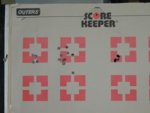
I agree with most of what has been said so far. I respectfully disagree with the notion that seating depth, or how far the bullet is away from the lands, makes little difference. Years ago I bought a Redding competition seating die for my .243 AI rifle. It has a micrometer type adjustment for seating depth. Being a new die I checked the cartridges with a Davidson comparator. I was surprised to see a fair difference between rounds. I went back to my Lee seater and found consistency. I took all the loaded rounds to the range and fired five round strings at 100 yards, letting the barrel cool between strings. The target on the left was with bullets seated .004 from the lands, the target on the right is the same with a little R-L breeze . The target in the middle is with the bullets seated at varying depths, still firing five in a string and cooling between strings. Bullet seating depth is important IMHO. For those who don't reload I have a suggestion; buy several boxes of ammo for your rifle, varied brands and bullet types and weights. For an elk rifle fire three shot strings, letting the barrel cool between strings. See what your rifle "likes." When you settle on that, buy a couple of those boxes. Keep those for your hunt and sighting in and shoot the rest for fun. Oh, be sure to thoroughly clean your rifle between boxes and fire a couple "foulers." Lots of work, some extra expense, but worth it when the bull of a life time is in your scope and you have every bit of confidence in your rifle to make the shot. Good hunting.

Target2.jpg
 

mtnsammy

Well-known member
Joined
May 22, 2011
Messages
873
Reaction score
2
This is all good. My father was a ballistic guru. He knew his loads better than the back of his hand. He could tell you what would happen with each bullet and why he chose that bullet for that deer. The best was when he shot his moose in the horn to spin the head for a good shot. I would have called Bu****it but he had it mounted and there is the hole in the horn.

With that said I have found it more challenging to find the game or even find the specific animal to hunt more of a challenge than which bullet with which load to shoot with. I have resolved to shoot factory loads for the consistent ballistics they provide for me. When I get the ability to find more game and select which animal I want to harvest I may up the game to specific ammo too.

I do miss my pops and all the high falluting discussions while we ate tag stew about why we had the wrong ammo for the hunt. I think he was just trying to mess with us to up his chances of clearing a tag.
 

Latest Posts

QRCode

QR Code
Top Bottom