Tech

Well-known member
Joined
Sep 21, 2017
Messages
46
Reaction score
0
Hi guys,
It has been a couple months that I started going for hog every weekend. I learned from reading and asking on this forum.
I started walk-in the dark, and get to the zone at 5am well before daylight.
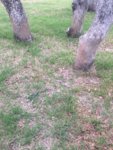
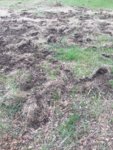
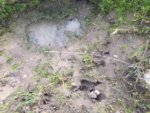
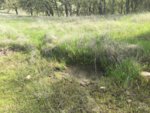
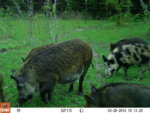
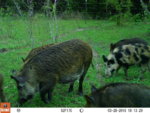
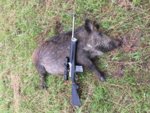
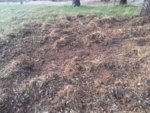
Here are a few photos I took from the field. The freshest sign I found was the wallow, anything beside that were old from my non-experience guess.
I have several questions, if you feel like don't want to answer publicly please PM me. I'd be really appreciate it.

1. What sign make you start high and glass down ?
2. What sing make you start walking ?
If you decide to walk, what area to walk. Along the creek, climb the hill up high , through brush ?
3. If you see a couple day old sign, do you change area or stay put hoping they return?
4. If you find fresh sign, how do you track them? What to look for, which way to track.
5. Does white light scare pig? I need some type of light so I can see the trail at 4am. Red light
6. If pig in the area, do you hear them first before you see them?
7. I fish for salmon a lot, I could tell from my gut feeling this water body would hold salmon. Not always true,most of the time true.
For you successful hog hunters, do you have the same gut feeling when hog would present?
8. I find it difficult to find high vantage point to glass, unless the spend a good time walking around.
This is really a disadvantage in the dark early morning hour. Is there a trick to find high vantage point?

Sorry for so many questions and thanks for reading.
 

Attachments

  • IMG_8808.jpg
    IMG_8808.jpg
    330.1 KB · Views: 6
  • IMG_8847.jpg
    IMG_8847.jpg
    335.4 KB · Views: 6
  • IMG_8848.jpg
    IMG_8848.jpg
    394.6 KB · Views: 6
  • IMG_8886.jpg
    IMG_8886.jpg
    327.6 KB · Views: 6
  • IMG_8888.jpg
    IMG_8888.jpg
    344.1 KB · Views: 7

Bubblehide

Well-known member
Joined
Aug 3, 2010
Messages
4,166
Reaction score
53
1. What sign make you start high and glass down ?
It's not a matter of glassing down, it's a matter of being somewhere where you can glass a large area i.e, glassing into reasonable open country. Country open enough to actually spot animals. I have plenty of spots that I glass up, across, down...

2. What sing make you start walking ?
It's not always a matter of walking. it's a matter of being in good logical places/high use areas. Nor cal can be a bit different than southern Ca, in that here it is often dry enough that little to no sign is left by animals. I heavily rely on learning an area and how the animals use the area. Such as high calorie but isolated food sources that are in season will draw animals potentially from miles away. Water sources in times of extreme heat. Pigs not only need to drink, but they do not have sweat glands as we do. So during times of extreme heat they need water sources, or cool damp ground to regulate their body temp. I also like to learn the animals bedding areas, as it will often be occupied by one group or another. I don't necessarily go into their bedding area. I hunt around it based on wind direction. So, I seldom go busting through brush, unless I am exploring a new area, or making a trail. So in short, the best way to make sure you not going to see pigs, is to bust through brush. If you do see them, it will be a fleeting glance.

3. If you see a couple day old sign, do you change area or stay put hoping they return?
Judging the age of sign is exceptionally difficult. It can take years to learn. You need to consider the environmental from the time it was left, to the time your seeing it. If you have enough moisture, sign can look fresh for day, even weeks. If you have really dry conditions, sigh can look old, even if the animal is just yards in front of you. Add wind to the matter, and it can get more complicated. I will however sweep track clean/away in some areas so that when I return, I know if animals have come through since me being there. But mostly, I base where I hunt on what I know about the area, and concentrate on high use areas. It simply takes time to learn an area. I don't use game cameras (yet), but a few well placed cameras moved from spot to spot could make a huge difference. If I am absolutely certain sign is very fresh, I will follow it. However, non of this keeps me from exploring areas within my hunt area.

4. If you find fresh sign, how do you track them? What to look for, which way to track.
First, I want to try to catch up and harvest one or more. So I follow the direction of the tracks. But, and this is a big but, to me it is important to not only know where they went, but where they came from. So I might go back and follow the tracks in the opposite direction (if I know an area well, I've already done this several times). During times of wet weather, it's easy, you see clear pig footprints in the wet ground. But you also might need to look for bent grass, turned stones/gravel (the ground side will be darker). But, as I said earlier, learning to track can take years, even a lifetime. I'm far from an expert, but I do okay. The bottom line here is it's not about following a set of tracks. It's about the information you gather over time.

5. Does white light scare pig? I need some type of light so I can see the trail at 4am. Red light
If the light is visible to the animal, it is highly likely to spook them to some degree. Just simply presume it will spook them. However, I have used a powerful red headlamp hiking at night deer hunting. My experience is that the deer might move off a bit. if I am stealthy; even good bucks, but they seldom spook off. If I am noisy, or moving to fast, they take off. Keep in mind, pigs are likely the number one poached animal, and most of that happens at night. I just try to get to where I want to be at least 1/2 hour before first light (minimum), and remain as motionless as I can, to let the area settle and the animals to forget about your presence.

6. If pig in the area, do you hear them first before you see them?
Both happen. Most often, I never hear them.

7. I fish for salmon a lot, I could tell from my gut feeling this water body would hold salmon. Not always true,most of the time true.
For you successful hog hunters, do you have the same gut feeling when hog would present?
This really doesn't translate to pigs. What I mean is that pigs leave sign no matter where they go. They are just a destructive animal. They can't help but leave sign. So even if I'm hunting a new area, I see sign. If I see sign, I know pigs use the area. I just don't know if they are there at the time I am, unless I see them of course. But to better answer your question, yes, some areas are much more likely to have and hold pigs. Such as oak woodland, riparian areas, areas close to agriculture and farms/ranches.

8. I find it difficult to find high vantage point to glass, unless the spend a good time walking around.
This is really a disadvantage in the dark early morning hour. Is there a trick to find high vantage point?
Nope, no tricks, just take the time to learn an area, which may take numerous trips. Some may say google earth or such, but nothing replaces boots on the ground.

Best of luck

I can't believe all these experienced guys haven't chimed in to try and help.
 

Bubblehide

Well-known member
Joined
Aug 3, 2010
Messages
4,166
Reaction score
53
Here's another tip. If you start viewing hunting as a chess game, your hunting will improve, a little. If you start viewing it as a chess game against master chess players, your hunting will improve more. If you view it as a chess game where your life is at stake, i.e., loser loses his life, your hunting will greatly improve. I had a good friend once tell me that he though hunting was just simply walking until you found the animals, (a common strategy that can work at times). To me hunting is a thinking mans, or womans game, kinda like chess. There is lots of room for strategy, and employing solid reason for choosing what to do and not do.

With that said, I do have a friend that only hunts pigs in the evenings. He leaves camp about an hour or so before sundown, depending on how far he intends to go, and he doesn't stop walking until last light, in which he heads back to camp. It's a very successful tactic for him. But he has learned the area exceptionally well. But then, I've shot pigs in places he has moved through and past. He however has shot pigs in areas I never went to, because I stayed in an area waiting for the pigs to come to me. Bottom line, it's a matter of being in the right place at the right time.
 

ltdann

Well-known member
Joined
Aug 27, 2007
Messages
4,780
Reaction score
144
All those pictures tell me that area is a hot spot! I haven't seen good sign like that in my areas in years.

Wherever that is, I'd be all over that, morning, noon and evening.
 

canamrider07

Well-known member
Top Poster Of Month
Joined
Jan 14, 2014
Messages
1,123
Reaction score
843
Tech, did you get a game cam? It is the best way that I have found to see the behavior of pigs. I am keeping track of one sounder right now. They are not doing the same thing everyday, but they do almost the same thing 4 days out of 7. I have been waiting for them the "other 3 days" so far. But this weekend I will try again. Be patient, each time you go out you will learn "what not to do" and eventually you will learn "what to do". Good luck.
 

Attachments

  • 03280531.jpg
    03280531.jpg
    312.3 KB · Views: 3
Last edited:

Tech

Well-known member
Joined
Sep 21, 2017
Messages
46
Reaction score
0
Wow Bubblehide, really great info. I'll try to remember and implement on my next hunting trip which is this weekend. I cannot help thinking about pig. Man I spend so much on gas, time, sweat and money than just hire a guide. Honestly, I'd be doing this all over if I knew what I knew now.
I like the challenge.

Canamrider07, I have not. I'll do it though once determine a location.

Itdann, I wish I have more time in the field. I burned 12 miles that day hiked up and down.
 

TheGDog

Well-known member
Joined
Oct 13, 2014
Messages
2,209
Reaction score
12
TrailCams will do SOO much to validate your suspicions and also to re-motivate you so that you don't feel like just some idiot out walking around by yourself in the middle of nowhere.

Hunting is definitely a chess game. Where each one little move is made each subsequent weekend/outing. 10-12 miles roundtrip sounds about right. IF need be, start thinking about stashing water back up in your spots to prepare you and give you a weight carrying buffer-zone in the hot months. Also remember to pay attention with your memory about how the wind direction changes at each particular spot depending on the time of day at which you are in that spot.

Often at times that wind direction change makes that good-looking hidy spot worthless between the hours of X and Y because it'll be blowing your scent into the direction they'd likely be coming from.

Also... just a thought... maybe you might want to start researching into vocalizations? Like pickup a hog grunting tube, and learn about the different kind of vocalizations and what they mean in their world. Implementing calling definitely helped me with success with the bucks! Don't see why it wouldn't help tip the odds in your favor for hogs too.
 

Tech

Well-known member
Joined
Sep 21, 2017
Messages
46
Reaction score
0
TheGDog, I hear you about wind direction. I forget about it sometimes as I am new to this. I'll have to keep remind myself to keep wind in my face.
 

ltdann

Well-known member
Joined
Aug 27, 2007
Messages
4,780
Reaction score
144
Wind is everything with hogs....their eyesight isn't that great. During one particular windy day, I made an approach from downwind and the noise from the grass moving covered my approach. I got close enough to I could have swatted the sow's butt. She was with a litter so I passed. Another time, got to 27 yards (laser) on a dead calm day, the wind swirled and the boar was gone like a lard covered watermelon seed.

If I didn't have to drive 300 miles, I'd be out a lot more often. The drought really, really hurt my honey holes.
 

Tech

Well-known member
Joined
Sep 21, 2017
Messages
46
Reaction score
0
Itdann, I could tell you that I won't sneak up that close since I rifle hunt. I'll let one lose 100 yards away:hog chewing:
Thanks for sharing.
 

TheGDog

Well-known member
Joined
Oct 13, 2014
Messages
2,209
Reaction score
12
TheGDog, I hear you about wind direction. I forget about it sometimes as I am new to this. I'll have to keep remind myself to keep wind in my face.

The sort of important thing to remember with the wind direction thing... is that you don't so much need to bother wasting your time with trying to visually scan thru the downwind direction area. So that can be helpful in terms of repositioning yourself on your sit so that you don't even have to turn your head at all in order to be able to visually scan the area of interest to you, namely the upwind/crosswind area.

Of course that's a little different when you're attempting to call-in predators. You have to choose where you sit in order to make good use of the foreknowledge that the predator will want to try to circle around downwind of where they see the decoy or hear the calling coming from.
 

hntboar

Well-known member
Joined
Jan 1, 2004
Messages
309
Reaction score
3
1. What sign make you start high and glass down ?
It's not a matter of glassing down, it's a matter of being somewhere where you can glass a large area i.e, glassing into reasonable open country. Country open enough to actually spot animals. I have plenty of spots that I glass up, across, down...

2. What sing make you start walking ?
It's not always a matter of walking. it's a matter of being in good logical places/high use areas. Nor cal can be a bit different than southern Ca, in that here it is often dry enough that little to no sign is left by animals. I heavily rely on learning an area and how the animals use the area. Such as high calorie but isolated food sources that are in season will draw animals potentially from miles away. Water sources in times of extreme heat. Pigs not only need to drink, but they do not have sweat glands as we do. So during times of extreme heat they need water sources, or cool damp ground to regulate their body temp. I also like to learn the animals bedding areas, as it will often be occupied by one group or another. I don't necessarily go into their bedding area. I hunt around it based on wind direction. So, I seldom go busting through brush, unless I am exploring a new area, or making a trail. So in short, the best way to make sure you not going to see pigs, is to bust through brush. If you do see them, it will be a fleeting glance.

3. If you see a couple day old sign, do you change area or stay put hoping they return?
Judging the age of sign is exceptionally difficult. It can take years to learn. You need to consider the environmental from the time it was left, to the time your seeing it. If you have enough moisture, sign can look fresh for day, even weeks. If you have really dry conditions, sigh can look old, even if the animal is just yards in front of you. Add wind to the matter, and it can get more complicated. I will however sweep track clean/away in some areas so that when I return, I know if animals have come through since me being there. But mostly, I base where I hunt on what I know about the area, and concentrate on high use areas. It simply takes time to learn an area. I don't use game cameras (yet), but a few well placed cameras moved from spot to spot could make a huge difference. If I am absolutely certain sign is very fresh, I will follow it. However, non of this keeps me from exploring areas within my hunt area.

4. If you find fresh sign, how do you track them? What to look for, which way to track.
First, I want to try to catch up and harvest one or more. So I follow the direction of the tracks. But, and this is a big but, to me it is important to not only know where they went, but where they came from. So I might go back and follow the tracks in the opposite direction (if I know an area well, I've already done this several times). During times of wet weather, it's easy, you see clear pig footprints in the wet ground. But you also might need to look for bent grass, turned stones/gravel (the ground side will be darker). But, as I said earlier, learning to track can take years, even a lifetime. I'm far from an expert, but I do okay. The bottom line here is it's not about following a set of tracks. It's about the information you gather over time.

5. Does white light scare pig? I need some type of light so I can see the trail at 4am. Red light
If the light is visible to the animal, it is highly likely to spook them to some degree. Just simply presume it will spook them. However, I have used a powerful red headlamp hiking at night deer hunting. My experience is that the deer might move off a bit. if I am stealthy; even good bucks, but they seldom spook off. If I am noisy, or moving to fast, they take off. Keep in mind, pigs are likely the number one poached animal, and most of that happens at night. I just try to get to where I want to be at least 1/2 hour before first light (minimum), and remain as motionless as I can, to let the area settle and the animals to forget about your presence.

6. If pig in the area, do you hear them first before you see them?
Both happen. Most often, I never hear them.

7. I fish for salmon a lot, I could tell from my gut feeling this water body would hold salmon. Not always true,most of the time true.
For you successful hog hunters, do you have the same gut feeling when hog would present?
This really doesn't translate to pigs. What I mean is that pigs leave sign no matter where they go. They are just a destructive animal. They can't help but leave sign. So even if I'm hunting a new area, I see sign. If I see sign, I know pigs use the area. I just don't know if they are there at the time I am, unless I see them of course. But to better answer your question, yes, some areas are much more likely to have and hold pigs. Such as oak woodland, riparian areas, areas close to agriculture and farms/ranches.

8. I find it difficult to find high vantage point to glass, unless the spend a good time walking around.
This is really a disadvantage in the dark early morning hour. Is there a trick to find high vantage point?
Nope, no tricks, just take the time to learn an area, which may take numerous trips. Some may say google earth or such, but nothing replaces boots on the ground.

Best of luck

I can't believe all these experienced guys haven't chimed in to try and help.

Great stuff Bubblehide. I think you covered most of the things I would have added. I think my motto has always been, stay on the tracks per bullet #4. Either backwards or forwards and follow old trails, they at times lead you to hogs!
 

canamrider07

Well-known member
Top Poster Of Month
Joined
Jan 14, 2014
Messages
1,123
Reaction score
843
I am going out the next 3 days and will target the sounder I have been keeping track of with my game cam. I usually setup the game cam early in the day and throw some corn in front of it. The latest pictures show the sounder coming out of the woods around 7 pm, I am going to get under my cedar tree, field blind, around 5 pm. I am only 25-30 feet away from the camera and the corn,,,should be fun. I am going for the big sow, let you know what happens.
 

Attachments

  • 03280531.jpg
    03280531.jpg
    312.3 KB · Views: 2

KTKT70

Well-known member
Joined
Jul 13, 2012
Messages
2,697
Reaction score
7
Great info here. I wonder if there is a trick to going down hill. I can not pick to go a different way if the hunting land is strait down. I'm sure there will be some less steep stuff once I'm in the holy land. But I'm talk No about getting there. The only legal access is from above. I have always thought I cant do anything. If the wind goes by me and down the hill, I have to keep going and hope to find tracks or other sings down the way.

Thanks agian for for all the info BH. Need to get out there soon. Winter is pretty much a done deal already.
 

ltdann

Well-known member
Joined
Aug 27, 2007
Messages
4,780
Reaction score
144
one way. It used to be worth it, I'd see 15-20 pigs in a weekend. Not always where I could get to them right away, but at least they were there. Now, after the drought, lucky to see one in 3 trips.
 

Schnitt

Active member
Joined
May 4, 2014
Messages
42
Reaction score
1
Those pics are great. Thanks for sharing. Its all really great sign and I hope by now, that you have pulled a pig out of there. That said, here are some thoughts.

Time of year changes things a lot. I have found good spots and have hung there all day only to eventually figure out that all the fresh sign is happening during the night and they are gone by legal shoot light in the morn. A trail cam can flush that out, or staying till dusk and then returning at dawn to see if there was activity while you were gone.
Getting to know the animal (what it wants and how it lives) is super valuable, but it hard information to learn if (like me) you rarely get to observe pigs directly. Spending lots of time in the field and learning to recognize more subtle sign can help.

Also, if you try to learn about pig hunting from Youtube (as I did) you will see lots of video of spot-stalk hunting, but my experience is that is not common..... Pigs hang out in thick brush that is too tall to be able to see them. The reason you see so much spot-stalk video is that is the only situation that they have time to make video of. Most of my opportunities have been Ambush or Jumping where there is not chance to video. So I dont actually glass much. Unlike deer, the pigs are short and moving fast. If you go to a vantage point and happen to see them, they are likely gone by the time you get to where they were.... at least that is the experience in the terrain that I hunt. I had to change much of my gear and tactics after spending time in the field compared to what I saw on the internet.

Winding: I so agree with everyone's caution on wind direction. I had a great experience on this. I was pig hunting and then paused when I saw a Tule elk come out of the bush about 150 yards away. I just froze and enjoyed watching the elk, when .... of all things.... a nice pig strolls right between the elk and I. I decided not to shoot, but just watch instead. The pig did not notice me, but I watched until it passed me and was then down wind. The pig froze, and stuck its nose up in the air, then she boogied back from where she came (passing me a second time). Direct evidence of how good their noses are and how much they rely on them. I think pigs ears and eyes are actually pretty good (about the same as humans) but their noses are incredibly sensitive and so they rely on them more.
 

canamrider07

Well-known member
Top Poster Of Month
Joined
Jan 14, 2014
Messages
1,123
Reaction score
843
I think this is the sow from the above picture.
 

Attachments

  • Pig122.jpg
    Pig122.jpg
    467 KB · Views: 4

TheGDog

Well-known member
Joined
Oct 13, 2014
Messages
2,209
Reaction score
12
Oh yeah... 2016 I experienced with the deer how your scent can travel to their nose through a bunch of thick brush between the two of you.

Had a spot where I groomed it in order to encourage them to want to pass thru some vegetation they were passing thru at particular spot. I groomed it weeks beforehand. Made that spot more cleared away and easier to go thru. To naturally encourage them to go that way.

So I'm sitting there... and I start to hear that syncopated sound of their footsteps very nearby!!... I draw my lever-action and point it at the cleared-out hole I cut-away, silently waiting for him to cross that threshold.

But... those footsteps then stopped! For quite a long time. All the while I'm holding silent and motionless. Where it is at... it cannot see me, nor I the deer. But I knew approx where it was in relation to that opening I made. Eventually...after one heckuva long pause of silence... it decided to slowly go back the way it came. And it was because the direction of the wind... at that time of day... made my setup there not work. And my scent had to travel thru a dense patch of thick brush I'd guesstimate to be maybe 20-30 foot to the other side where it paused and then eventually turned back around at.

So when you're observing/inspecting along the potential game trails you might pick a spot to sit and hide near. You need to think about potentially where you will sit in the AM vs where you will sit in the PM when the wind direction changes. And remember... the downwind-side is useless to you. No way anything besides a predator is coming from that direction towards you.

Also ya gotta think about how the sun and the resultant shadows will move while you are sitting there. Some of the spots you might have considered sitting at will suck and be blown once the sun comes up and the shadows start to move. Try to pick that sit spot with the moving of the shadows somewhat in mind. When you are not sitting in the shade its a bazillion times easier for the animals to see your motion/movements.

You'll see what I'm saying is true as you start to encounter more sightings of animals while in the field. When they are in the sunlight and move... you can't help but see them. But when they are in the shadows, it's significantly trickier to notice sometimes.
 
Last edited:

canamrider07

Well-known member
Top Poster Of Month
Joined
Jan 14, 2014
Messages
1,123
Reaction score
843
I read all this about wind and scent, don't do this, step here, not there, do this and that, I have never had a problem or bother with any of that. I have never had a hog put his nose in the air and run, they might put their nose in the air, but they have not run. And I am not around any "special type" hogs and I can get very close to the hogs when I hunt. Noise is what I try and keep to a minimum, if I can see a hog before he hears me, I can get to them. Look at their ears, they are huge, it is the first thing I see. What I notice in hogs, is that they are hungry, when moving from one place to another, they move quickly to get there, when rooting/feeding their mind is on food and they concentrate on that. I have been very close watching this waiting for a good shot. They rarely travel in the same place in a consistent pattern or the same time of day. If you see a turd out in a field, it means nothing, do you ever see turds piled up in field with some old ones and new ones? No... A pig trail is a good indicator they are around but won't tell you when they might be back. This is just what I see and do and I have been successful.
 

Latest Posts

QRCode

QR Code
Top Bottom