The Miracle of the African Trophy
As a Professional Hunter and Safari consultant I’m quizzed on many African Hunting topics. One of the most common is “how do we get the skins and horns home”. Or I hear the horror of what the hunter received in his crate and what his options are in getting them replaced. They ask me what the outfitter should be required to do to help them with the poor or unusable condition the skins arrived in. Many had the greatest experience of their lives on the Safari, but have no quality trophies to mount. What they remember most from the experience is the stress and anger in the quality of the returned hides and horns.
I’ve sat with some of these people at sportsmans shows I have done. They truly are very happy with the experience they had hunting, they are glowing with the excitement they are sharing while telling the stories about the trip. Yet the reason they stopped to talk with me was to ask about what should the outfitter be required to do for ruining his trophies? This is not an uncommon experience. It’s very rare to have every trophy spoiled or hair slipped. It’s more common to have one cape, or a part of one cape slipped or spoiled. It has been seen where a crate shows up and it’s infested with beetles or other bugs. I worked for years at a really large Taxidermy operation that had a strong African business. The crates arriving to us monthly had bugs inside all the time. Capes had green mold on them, horns were broken, the Skins had been wet and dried and began rotting in the crate. This problem was stressful to me even 25 years ago, and it was not my business! The owner of the taxidermy business just looked at it as “Oh Well” not my problem this is the way they came to me. He would make the call to the hunter and tell him the situation regarding the trophy condition. The owners really had very little they could do, so they replied “do your best with my trophies”
So, why the trouble with getting quality trophies out of Africa? How come so many have no trouble at all yet others lose some or all of the trophies they shipped back? Let’s look at the process and logistics of this part of the Safari and what causes or is likely the cause of the problems. I’ll start with the actual hunt right from the beginning of the process. Let’s also put into perspective that the trophies are often being shot in 80-100 deg weather along with bright sunshine.
Once the animal is shot, it will be moved and twisted and dragged to position for photos. Rough handling to be sure, but nothing unusual or that would not also be done back in North America or Europe. However this is the beginning of what will eventually be a long process of stress to the skin and hair. After the photo’s you walk, or drive back to the camp to get some staff to load the game in a truck. This could be anywhere from a few minutes to an hour or more. All this time the animal is in the sun, in warm to outright hot weather. It could also be shot late in the evening and not be recovered until the next morning.
Once you arrive back on site, if you do go back with the crew, the staff will wrestle and winch, lift and tug on this animal to get it into the truck. Then the trip back to the skinning area with the animal. They will hang it and skin it out, butcher the meat, or hang that in a cool room. Another staff member, usually the most skilled of the crew will do the final caping of the head skin. After the skin is removed it’s rinsed off and soaked in an anti-bacteria solution. The observation here is that some rather unskilled minimally trained people are usually the ones doing this. They are also several levels removed from the final results. The concern they show and the responsibility they take is usually rather limited. The education they have is minimal, they do not even have the concept that anything could be wrong with the solution to consider or worry about that. As the morning sun rises and the sunshine is now at various angles some hides sit in direct sunshine, while others may be in the shade. There is simply no grasp of the concepts of preserving skins or the little details like sunshine and bacteria. Once this skin has been soaked for a couple hours it’s hung to drip dry. It’s likely been many hours now since the animals death. This step should be eliminated in my professional opinion. The addition of soaking the hides in some warm water without any chemical knowledge or ph level of this solution, not knowing what the bacteria levels might be in this “anti bacteria” solution are strongly suspect.
Just salting the hides right after skinning has been very successful for over 100 years now. I’m not convinced that the average staffs experience or education in most operations is at a level to diagnose any problems. It will have been many hours before the first salt hits the skin. Here is one of the biggest questions in the process. What kind of salt? Rock salt is a bad choice. Fine ground salt is best. The majority of camps I have seen in Both RSA and Zimbabwe have used something like crushed rock salt. Not at all a fine grind, but better then true rock salt. Some camps I have seen use the salt over and over as well. Once bacteria gets into the salt it gets introduced to the next skins. I don’t see a problem with using clean dry salt over one more time, but when it’s reddish or brown and bloody using it a second time is a real problem and sure to cause trouble down the road. Now the skin is left to let the salt do its work. About two days later it will be re-salted and let to sit one or more days before it is hung on a wooden rail to air dry before it’s folded and allowed to sit awaiting the dip process which is usually done off site in a Dip Pack Processing facility.
After your trophy arrives at the Dip Pack Facility is re-hydrated for the dip Process and again put into an antibacterial solution. Then it’s soaked in a solution that assures no disease or other problems in the skin can come across the ocean and cause troubles in the USA. All the skulls are boiled and horns removed. It’s a process that is measured and controlled by the Veterinary administration in South Africa. The “Dip Pack” folks doing this process have no real means of cutting corners on it because each and every shipment must be inspected and signed off by the local veterinarian before it can be shipped out of the country.
After the inspection is over and signed off, the crate is sealed up and taken to the airport or shipper. Here is another issue. There was not much concern over the wood used to build the crates until recently. Because of this much of the lumber was old or stored where bugs could get burrowed into it. These beetles could hatch and get into the trophies after the crate was sealed up. There is also another very troubling issue that happens to the majority of trophy shipments. Because much of the sport hunting takes place in May through July, many of these crates are ready to ship to the USA in the mid winter months of December and January. These months are the middle of Summer here in South Africa, the primary departure point for most of the trophies hunted anyplace in southern Africa.
Because this is a more rainy time of year, and also very hot those crates sitting in the sun can cause serious issues for the somewhat perishable contents. Add to that, the possible water and moisture while staged waiting for the flights. Also consider that the trophies done perfectly and packed with flawless precision using new treated wood are stacked right with those which have not been done as well. They may be stacked up with other crates that have nothing at all to do with trophies or hunting. Those wood crates may not have any legal requirement with using treated wood. Insects know no boundaries but are very much attracted to the possible oils, blood, grease smells coming from within your crate filled with hides and horns! The warm weather is the peak of insect activity as well. There is a better then likely possibility that your crate full of trophies if delivered to the airport in late November will still be there in January. During the holiday season perishable items are the priority. Dried salted trophies are not listed as perishable. So your wood crate will be warehoused indoors or maybe outdoors with stacks and stacks of other crates awaiting it’s turn to load onto the jet.
Once your crate leaves the Airport and makes the trip across the Atlantic it arrives in a shippers warehouse in the USA. Then a broker will usually arrive to clear the Customs and Federal F&W process. Its then put on a truck and shipped across country to your home, taxidermist, or tannery. The likely freezing and thawing and sitting in the sun in a roasting hot Trailer is a real possibility depending on where it’s headed . Here begins another whole series of processing. If you had a Primate or Wild swine in the crate, The Import Broker must deliver it to a Agriculture Department Permit holder. From there it must be processed with specific regulations for these species. Then it can be shipped to the taxidermist or tannery. Once the crate arrives at the tannery or taxidermist the skins and horns will be processed yet again by them. The skins are re-hydrated and the tanning process begins. I have also heard of stories about Warthogs on the manifest being signed for by the Broker, processed by the Agriculture department, but not in the crate when the Taxidermist gets it. Somehow these trophies managed to get through the crime ridden country of South Africa but show up missing upon arrival traveling within the USA! How can this happen? I personally had two Warthogs shipped to me by UPS from across the USA. Only one was in the box when it arrived. I know the person shipping them, I spoke to the Shipper who packed them. They were both in the box in Washington DC when they were packaged up. Along the way did somebody from the carrier open and steal my warthog skull? It’s gone, and nothing I can do to recover it now.
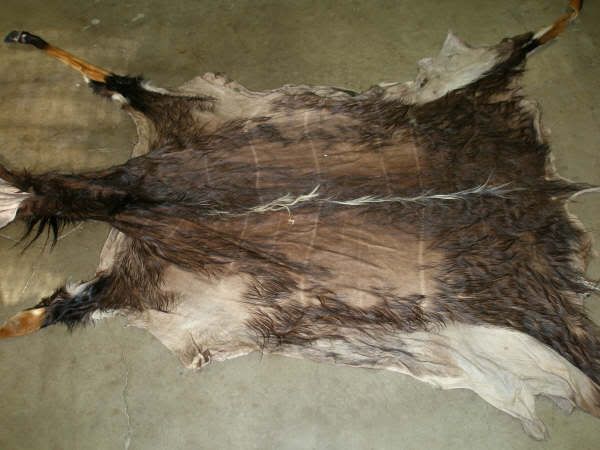
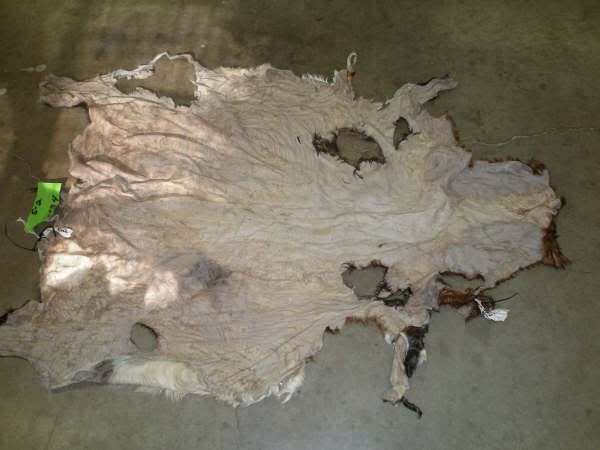
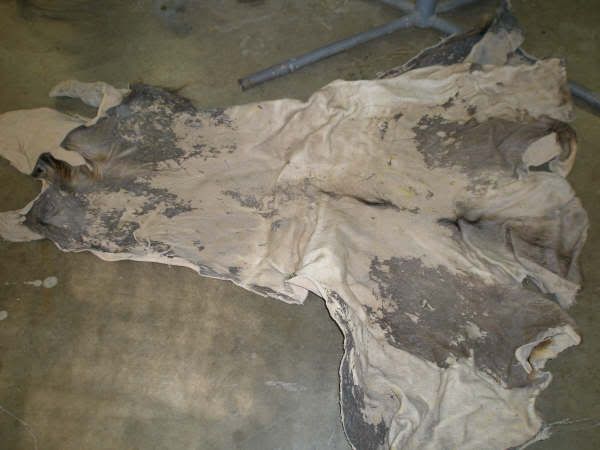
Here is a very touchy subject for many taxidermists. It’s my very strong opinion that African Skins dried as hard as a sheet of plywood must be handled by an African skilled taxidermist. These are handled much differently then a fresh whitetail cape brought in to the same taxidermist. If you really want to have a successful completion of this whole event, choose wisely. Those who say they tan their own skins would be very suspect for me. Those part time small scale taxidermists might be less expensive, but do they really understand the complex nature of reviving these dried skins? Sure they may get a few to turn out well, but is that worth the risk for all of them? The best places to look for success are those which do a whole lot of African Taxidermy, and use a premier tannery which is also experienced and skilled in African game.
Skins that fail in tanning because of their minimal experience and skills can easily be written off as poor prior handling in Africa. Who could argue with that, based on the process I have already described. The tannery and the taxidermist will have the standard disclaimer that nothing that happens is their fault, you signed this when you dropped the trophies off, or agreed to the work! This disclaimer was originated because of the prior problems that can happen during the various processes that occur before they even get the hides. They can after all only work with what they get! On the other hand I know of 5 hunters in a camp at the same time a few seasons ago. 4 used the same high end African specific taxidermist in the USA and all had perfect results. The other used a little known small scale taxidermist to save a few bucks. He lost almost all his trophies due to the skins failing. He called and was as you might expect quite upset. His taxidermist claimed the hides were all bad. Yet his four buddies all hunting with him the whole time bringing in trophies the same days, handled exactly the same had no trouble whatever. He demanded all new capes and that the pack and dip also be paid. How could this be? With that camp having 150 exported capes during the same season all over the world only this mans trophies were bad? I suspect his small scale taxidermist was the common denominator and not the process or any of the people from the start. However his trophies missed the early winter shipping deadline and only arrived in late winter. So was it a problem while staged in the warehousing area awaiting shipment to America? Yet another couple guys had beetle infestation on trophies, they too had crates staged for a while at the airport awaiting the flight to the USA.
One of the easily solved parts of this puzzle is to be certain that the crate is shipped before November 15th or After Jan 15th. It’s the way the really skilled and experienced Dip Pack processors in RSA are doing this now. They have learned to avoid the holiday rush. Now they ship before November or later in February or even March when there is a minimal backlog for these crates to be held up. I know one who has the space and holds the crates until they are going to leave. He will only dispatch them the week they leave to meet the flight. As far as what the Outfitter or Dip Pack company is responsible for…………well that’s a very tough call. How can anyone take total blame without a specific issue or failure that they may have caused? When folks question me about what they can do to recover lost trophies or getting a refund of some sort from their outfitter, I’m at a loss for how they can get anything. Proof of fault is going to be very complicated. As I have written here the likely problems in Africa are high, but shipping and insect or moldy wet hides from shipping are known issues. As are faults involving American Taxidermists and tanneries. The Outfitter is most likely going to say I had no other issues from the dozens of hunters we had last season, so it cannot be my process. The Dip Pack will claim the same thing. However if the Outfitter hears about problems from several hunters, and used the same dip pack process for them all, well that narrows the problem area down a bit. In the case above where all the trophies were good except for the one guy who used his own taxidermist……. Well that also narrows down who I would suspect at as well.
Finally the tanned skin comes to the taxidermist. He will re-hydrate the skin yet again! Then he must stretch it back to its original living size to be able to fit this on the forms used to do the mount. Picture if you will a dried leather chamois cloth its stiff and brittle feeling. Yet when wet it’s almost like skin again. Then the taxidermist must align the skin and fight a bit with it to make it fit correctly.
The finger pointing with a dozen people involved from the effort of pulling the game into position for photo’s, to the taxidermist stretching the hide over the manikin can be impossible to sort through. Now you can look at your trophies with a whole new level of enjoyment. The final product will last just about forever if kept cool and dry. But it’s a miracle your capes make it this far at all. There are so many people along the way that can ruin this for you. So when you are sitting in your living room or trophy room admiring the trophies and your successful hunt. Think about what that hide has gone through to get put on your wall.
As a Professional Hunter and Safari consultant I’m quizzed on many African Hunting topics. One of the most common is “how do we get the skins and horns home”. Or I hear the horror of what the hunter received in his crate and what his options are in getting them replaced. They ask me what the outfitter should be required to do to help them with the poor or unusable condition the skins arrived in. Many had the greatest experience of their lives on the Safari, but have no quality trophies to mount. What they remember most from the experience is the stress and anger in the quality of the returned hides and horns.
I’ve sat with some of these people at sportsmans shows I have done. They truly are very happy with the experience they had hunting, they are glowing with the excitement they are sharing while telling the stories about the trip. Yet the reason they stopped to talk with me was to ask about what should the outfitter be required to do for ruining his trophies? This is not an uncommon experience. It’s very rare to have every trophy spoiled or hair slipped. It’s more common to have one cape, or a part of one cape slipped or spoiled. It has been seen where a crate shows up and it’s infested with beetles or other bugs. I worked for years at a really large Taxidermy operation that had a strong African business. The crates arriving to us monthly had bugs inside all the time. Capes had green mold on them, horns were broken, the Skins had been wet and dried and began rotting in the crate. This problem was stressful to me even 25 years ago, and it was not my business! The owner of the taxidermy business just looked at it as “Oh Well” not my problem this is the way they came to me. He would make the call to the hunter and tell him the situation regarding the trophy condition. The owners really had very little they could do, so they replied “do your best with my trophies”
So, why the trouble with getting quality trophies out of Africa? How come so many have no trouble at all yet others lose some or all of the trophies they shipped back? Let’s look at the process and logistics of this part of the Safari and what causes or is likely the cause of the problems. I’ll start with the actual hunt right from the beginning of the process. Let’s also put into perspective that the trophies are often being shot in 80-100 deg weather along with bright sunshine.
Once the animal is shot, it will be moved and twisted and dragged to position for photos. Rough handling to be sure, but nothing unusual or that would not also be done back in North America or Europe. However this is the beginning of what will eventually be a long process of stress to the skin and hair. After the photo’s you walk, or drive back to the camp to get some staff to load the game in a truck. This could be anywhere from a few minutes to an hour or more. All this time the animal is in the sun, in warm to outright hot weather. It could also be shot late in the evening and not be recovered until the next morning.
Once you arrive back on site, if you do go back with the crew, the staff will wrestle and winch, lift and tug on this animal to get it into the truck. Then the trip back to the skinning area with the animal. They will hang it and skin it out, butcher the meat, or hang that in a cool room. Another staff member, usually the most skilled of the crew will do the final caping of the head skin. After the skin is removed it’s rinsed off and soaked in an anti-bacteria solution. The observation here is that some rather unskilled minimally trained people are usually the ones doing this. They are also several levels removed from the final results. The concern they show and the responsibility they take is usually rather limited. The education they have is minimal, they do not even have the concept that anything could be wrong with the solution to consider or worry about that. As the morning sun rises and the sunshine is now at various angles some hides sit in direct sunshine, while others may be in the shade. There is simply no grasp of the concepts of preserving skins or the little details like sunshine and bacteria. Once this skin has been soaked for a couple hours it’s hung to drip dry. It’s likely been many hours now since the animals death. This step should be eliminated in my professional opinion. The addition of soaking the hides in some warm water without any chemical knowledge or ph level of this solution, not knowing what the bacteria levels might be in this “anti bacteria” solution are strongly suspect.
Just salting the hides right after skinning has been very successful for over 100 years now. I’m not convinced that the average staffs experience or education in most operations is at a level to diagnose any problems. It will have been many hours before the first salt hits the skin. Here is one of the biggest questions in the process. What kind of salt? Rock salt is a bad choice. Fine ground salt is best. The majority of camps I have seen in Both RSA and Zimbabwe have used something like crushed rock salt. Not at all a fine grind, but better then true rock salt. Some camps I have seen use the salt over and over as well. Once bacteria gets into the salt it gets introduced to the next skins. I don’t see a problem with using clean dry salt over one more time, but when it’s reddish or brown and bloody using it a second time is a real problem and sure to cause trouble down the road. Now the skin is left to let the salt do its work. About two days later it will be re-salted and let to sit one or more days before it is hung on a wooden rail to air dry before it’s folded and allowed to sit awaiting the dip process which is usually done off site in a Dip Pack Processing facility.
After your trophy arrives at the Dip Pack Facility is re-hydrated for the dip Process and again put into an antibacterial solution. Then it’s soaked in a solution that assures no disease or other problems in the skin can come across the ocean and cause troubles in the USA. All the skulls are boiled and horns removed. It’s a process that is measured and controlled by the Veterinary administration in South Africa. The “Dip Pack” folks doing this process have no real means of cutting corners on it because each and every shipment must be inspected and signed off by the local veterinarian before it can be shipped out of the country.
After the inspection is over and signed off, the crate is sealed up and taken to the airport or shipper. Here is another issue. There was not much concern over the wood used to build the crates until recently. Because of this much of the lumber was old or stored where bugs could get burrowed into it. These beetles could hatch and get into the trophies after the crate was sealed up. There is also another very troubling issue that happens to the majority of trophy shipments. Because much of the sport hunting takes place in May through July, many of these crates are ready to ship to the USA in the mid winter months of December and January. These months are the middle of Summer here in South Africa, the primary departure point for most of the trophies hunted anyplace in southern Africa.
Because this is a more rainy time of year, and also very hot those crates sitting in the sun can cause serious issues for the somewhat perishable contents. Add to that, the possible water and moisture while staged waiting for the flights. Also consider that the trophies done perfectly and packed with flawless precision using new treated wood are stacked right with those which have not been done as well. They may be stacked up with other crates that have nothing at all to do with trophies or hunting. Those wood crates may not have any legal requirement with using treated wood. Insects know no boundaries but are very much attracted to the possible oils, blood, grease smells coming from within your crate filled with hides and horns! The warm weather is the peak of insect activity as well. There is a better then likely possibility that your crate full of trophies if delivered to the airport in late November will still be there in January. During the holiday season perishable items are the priority. Dried salted trophies are not listed as perishable. So your wood crate will be warehoused indoors or maybe outdoors with stacks and stacks of other crates awaiting it’s turn to load onto the jet.
Once your crate leaves the Airport and makes the trip across the Atlantic it arrives in a shippers warehouse in the USA. Then a broker will usually arrive to clear the Customs and Federal F&W process. Its then put on a truck and shipped across country to your home, taxidermist, or tannery. The likely freezing and thawing and sitting in the sun in a roasting hot Trailer is a real possibility depending on where it’s headed . Here begins another whole series of processing. If you had a Primate or Wild swine in the crate, The Import Broker must deliver it to a Agriculture Department Permit holder. From there it must be processed with specific regulations for these species. Then it can be shipped to the taxidermist or tannery. Once the crate arrives at the tannery or taxidermist the skins and horns will be processed yet again by them. The skins are re-hydrated and the tanning process begins. I have also heard of stories about Warthogs on the manifest being signed for by the Broker, processed by the Agriculture department, but not in the crate when the Taxidermist gets it. Somehow these trophies managed to get through the crime ridden country of South Africa but show up missing upon arrival traveling within the USA! How can this happen? I personally had two Warthogs shipped to me by UPS from across the USA. Only one was in the box when it arrived. I know the person shipping them, I spoke to the Shipper who packed them. They were both in the box in Washington DC when they were packaged up. Along the way did somebody from the carrier open and steal my warthog skull? It’s gone, and nothing I can do to recover it now.
Here is a very touchy subject for many taxidermists. It’s my very strong opinion that African Skins dried as hard as a sheet of plywood must be handled by an African skilled taxidermist. These are handled much differently then a fresh whitetail cape brought in to the same taxidermist. If you really want to have a successful completion of this whole event, choose wisely. Those who say they tan their own skins would be very suspect for me. Those part time small scale taxidermists might be less expensive, but do they really understand the complex nature of reviving these dried skins? Sure they may get a few to turn out well, but is that worth the risk for all of them? The best places to look for success are those which do a whole lot of African Taxidermy, and use a premier tannery which is also experienced and skilled in African game.
Skins that fail in tanning because of their minimal experience and skills can easily be written off as poor prior handling in Africa. Who could argue with that, based on the process I have already described. The tannery and the taxidermist will have the standard disclaimer that nothing that happens is their fault, you signed this when you dropped the trophies off, or agreed to the work! This disclaimer was originated because of the prior problems that can happen during the various processes that occur before they even get the hides. They can after all only work with what they get! On the other hand I know of 5 hunters in a camp at the same time a few seasons ago. 4 used the same high end African specific taxidermist in the USA and all had perfect results. The other used a little known small scale taxidermist to save a few bucks. He lost almost all his trophies due to the skins failing. He called and was as you might expect quite upset. His taxidermist claimed the hides were all bad. Yet his four buddies all hunting with him the whole time bringing in trophies the same days, handled exactly the same had no trouble whatever. He demanded all new capes and that the pack and dip also be paid. How could this be? With that camp having 150 exported capes during the same season all over the world only this mans trophies were bad? I suspect his small scale taxidermist was the common denominator and not the process or any of the people from the start. However his trophies missed the early winter shipping deadline and only arrived in late winter. So was it a problem while staged in the warehousing area awaiting shipment to America? Yet another couple guys had beetle infestation on trophies, they too had crates staged for a while at the airport awaiting the flight to the USA.
One of the easily solved parts of this puzzle is to be certain that the crate is shipped before November 15th or After Jan 15th. It’s the way the really skilled and experienced Dip Pack processors in RSA are doing this now. They have learned to avoid the holiday rush. Now they ship before November or later in February or even March when there is a minimal backlog for these crates to be held up. I know one who has the space and holds the crates until they are going to leave. He will only dispatch them the week they leave to meet the flight. As far as what the Outfitter or Dip Pack company is responsible for…………well that’s a very tough call. How can anyone take total blame without a specific issue or failure that they may have caused? When folks question me about what they can do to recover lost trophies or getting a refund of some sort from their outfitter, I’m at a loss for how they can get anything. Proof of fault is going to be very complicated. As I have written here the likely problems in Africa are high, but shipping and insect or moldy wet hides from shipping are known issues. As are faults involving American Taxidermists and tanneries. The Outfitter is most likely going to say I had no other issues from the dozens of hunters we had last season, so it cannot be my process. The Dip Pack will claim the same thing. However if the Outfitter hears about problems from several hunters, and used the same dip pack process for them all, well that narrows the problem area down a bit. In the case above where all the trophies were good except for the one guy who used his own taxidermist……. Well that also narrows down who I would suspect at as well.
Finally the tanned skin comes to the taxidermist. He will re-hydrate the skin yet again! Then he must stretch it back to its original living size to be able to fit this on the forms used to do the mount. Picture if you will a dried leather chamois cloth its stiff and brittle feeling. Yet when wet it’s almost like skin again. Then the taxidermist must align the skin and fight a bit with it to make it fit correctly.
The finger pointing with a dozen people involved from the effort of pulling the game into position for photo’s, to the taxidermist stretching the hide over the manikin can be impossible to sort through. Now you can look at your trophies with a whole new level of enjoyment. The final product will last just about forever if kept cool and dry. But it’s a miracle your capes make it this far at all. There are so many people along the way that can ruin this for you. So when you are sitting in your living room or trophy room admiring the trophies and your successful hunt. Think about what that hide has gone through to get put on your wall.